|
Hocking Hills Cabins, Hocking Hills Cottages Hocking Hills Inns
2008 Special Events 43rd Annual Winter Hike January 19 - Continuous starts from 9-11 AM Enjoy winters splendor on this 6-mile trek from Old Man’s Cave to Ash Cave. Layered clothing and good footwear recommended. Refreshments are available at Cedar Falls for a donation. A shuttle bus returns hikers to Old Man’s Cave.
Sweethearts Hike February 9 - 5-7 PM Meet at the Ash Cave parking lot. Take your sweetheart for a romantic stroll to Ash Cave in the soft light of dusk. Afterwards, enjoy a cozy fire and refreshments.
Maple Sugaring in the Hills March 8 & 9- 12-4 PM Join us at the Naturalist Cabin located behind the Old Man’s Cave Visitor Center. Savor the taste of the season as we boil down our local maple sap. Discover the many methods used throughout history to make this tasty treat. Free samples are available.
Wildflowers and Waterfalls Hike April 19 -10 AM Observe nature’s carpet of wildflowers and sparkling waterfalls in beautiful Hocking Hills. Meet at the parking lot at Ash Cave.
Frontier Trail Hike May 3 -12-4 PM Explore the history of the Hocking Hills region with a walk back through time dramatized by costumed interpreters along Ash Cave trail. Maybe even join in and try your hand at the Frontier Trail Games on Sunday afternoon!
Hocking Valley Birding Trail Presents: International Migratory Bird Weekend May 9-11 Times and locations will vary…see the flier, www.birdhocking.com or the parks website for details. Join with several area naturalist and birders along the Hocking Valley Birding Trail route for a variety of programs, hikes and events to celebrate the return of our avian friends.
Grandma Gatewood’s Fall Colors Hike October 18- 1:00 PM Bring along a cool drink and celebrate the season’s colors. Meet with the naturalist at the Old Man’s Cave Visitor Center for a strenuous hike that spans roughly 6 miles of the Grandma Gatewood trail. We will be traversing the section that runs from Old Man’s Cave to Cedar Falls and back while enjoying the scenic beauty and cultural personality. This hike does include several hills and steps and is not recommended for the easily winded individual. (Approx. 3to4 hrs)
Haunted Hocking Weekend October 31 & November 1 Join with the Haunted Hocking “HIT” team as they search for the unexplained at Ash Cave or try your hand at Pumpkin decorating. Registered campers and cabin guest can enjoy a hayride, a family fun spooky movie, site judging, and trick or treat at Old Man’s Cave campground. Regular camping & cabin fees apply.
Christmas in Ash Cave December 13- 5 – 7 PM Step away from the hectic holiday season and come bundled for the weather while enjoying a lighted stroll back to Ash Cave. Once you arrive at the cave warm with refreshments by an open fire. Listen to or join with our carolers, have the kids visit with an old fashion Santa or help to decorate our Christmas tree for wildlife.
Hocking Hills State Park
|




















 |
|

|
Hunter's getaways-2007! Looking for cabins that welcome hunters during the season? Look no farther. . .Below is a list of places that allow hunters and some even offer specials:
Click here for information about Division of Wildlife Hunting Laws
or call
1-800-WILDLIFE.
Denotes that cabin may offer specials. Limitations and special dates apply so check with owner for more information. Great Escape Cabins - Quiet morning awakenings. Peaceful afternoons. Romantic Evenings. Discover the serenity
10567 SR 664 N Logan, OH 43138 (740) 380-2606
Hocking Hills Farm - Many consider this "the place we come back to year after year". Situated on 140 secluded acres.
25120 Locust Grove Road Creola, Ohio 45622 (740) 596-2686 888-596-2686
Hocking Hills Homestead - Hocking Hills cabin and cottage rental with a pet friendly environment, country settings and hot tubs.
homestead@scpwildblue.com
Best Nest Cabins - Panoramic views and stocked ponds make for a unforgettable stay.
34125 Moore Road Logan, Ohio 43138-9430 (800) 213-8780 (740) 385-4073
Sunrise Log Cabins - Spacious fully furnished 1,2 and 4 bedroom log cabins on 9 acres.
30080 Phelps Road Logan, Ohio 43138 888-601-3085
Hocking Hills Hunting-Deer Hunting Regulations as printed by the Division of WildlifeClick here for the most up to date info from Division of Wildlife!
2006 - 2007
|
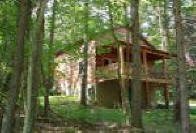
 Hocking
Hills Farm
Hocking
Hills Farm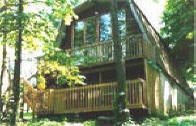

|
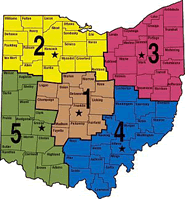
Permission to Hunt The landowner’s written permission is required for hunting and trapping on private land, regardless of whether the land is posted. Permission slips are available at Division of Wildlife district offices and some license outlets. The Penalty for Hunting Without Written Permission The maximum penalty for hunting without written permission of the landowner for a first offense is 60 days in jail and a $500 fine. The maximum penalty for a second offense is 90 days in jail and a $750 fine. A person must carry written permission at all times while engaging in hunting or trapping on private land and exhibit it upon request to a state wildlife officer, sheriff, deputy sheriff, police officer, other law enforcement officer, owner of the land, or the landowner’s authorized agent. Hunting Methods Unless otherwise indicated, game may be taken with longbow, crossbow, or any caliber handgun, rifle, shotgun (10 gauge or smaller), or airgun. Be safe and choose the appropriate method for the species. Game birds and game quadrupeds may not be taken by trapping. Electronic callers may be used while hunting, except while hunting migratory game birds (waterfowl, rails, and shorebirds) and wild turkeys. It is lawful to use electronic callers for crow hunting. It shall be unlawful to use any device capable of transmitting or receiving a person’s voice to aid in the hunting or taking of deer. Spotlighting of wild animals from vehicles, including illuminating with headlights, is prohibited. Spotlighting is illegal whether hunting implements are carried in the vehicle or not. Persons hunting, trapping, or pursuing furbearing animals at night must carry a continuous white light visible for at least 1/4 mile. When two or more persons are hunting or trapping together for furbearing animals, only one light is required and may be carried by any member of the party. Persons hunting foxes or coyotes with a call from a stationary position may use a single beam light. It is unlawful to possess a hunting device while training or working a dog pursuing coyotes from sunset to sunrise. All hunting from motor vehicles, except boats and machinery being used in farm operations is prohibited. Hunters who are physically handicapped to the extent that they cannot walk, may hunt from a stationary vehicle in a field except on a public hunting area. Hunting all game and furbearers except mink, muskrat, and beaver is lawful from a boat or powercraft. All hunting from aircraft is prohibited. It is unlawful to shoot from, on, across, or along a public road or highway. During the statewide muzzleloader season and youth deer gun season it is unlawful to hunt legal game with shot shells containing shot larger than #4. Waterfowl hunters must use nontoxic shot of any size. During the youth deer gun season, deer gun season, and the muzzleloader deer season all hunters must visibly wear a vest, jacket, coat, or coveralls that are solid hunter orange or hunter orange camo, except waterfowl hunters. Longbows and crossbows may be used to take legal game. However, crossbows may not be used to hunt migratory game birds. Longbow hunters may use a hand-held mechanical release. Crossbows may be cocked with a device, but must have a working safety and a stock more than 25 inches long. Arrows for longbow and crossbow must be tipped with a broadhead not less than 3/4 inch wide while hunting deer or turkey. The arrow tip must have a minimum of two cutting edges which may be exposed or unexposed. It is unlawful to hunt deer or turkey with a longbow having a draw weight of less than 40 pounds, or with a crossbow having a draw weight of less than 75 pounds or more than 200 pounds. Poisoned or explosive arrows are unlawful. While hunting, it is unlawful to have attached to a longbow or crossbow any mechanical, electrical, or electronic device capable of projecting a beam of light. Share the Bounty There are two organizations in Ohio fighting hunger by helping hunters donate a portion or all of their venison to folks who need it. The Division of Wildlife wishes to thank you, the Ohio hunter, for making a difference by donating your venison to the hungry of our state. Visit the Hunters for the Hungry section of our web site for more information.
|
Public Hunting Lands
It is unlawful for any person to use a rifle, pistol, revolver,
shotgun or other firearm at any time on any land or water area,
controlled or administered by the Division of Wildlife except
while lawfully trapping, or hunting wild animals, or target
practicing on a designated Division of Wildlife target range.
Portions of Deer Creek, Resthaven, La Su An, Grand River, Brush Creek, Waterloo, Cooper Hollow, East Fork, and Fallsville wildlife areas will be open for disabled persons to drive their cars or trucks to designated interior areas for hunting. Disabled persons are required to have a physician’s statement listing the illness or disability that prohibits them from walking. It remains unlawful to shoot from any motorized vehicle. It is unlawful to hunt with or possess any shot except nontoxic shot at Metzger Marsh, Mallard Club, Pipe Creek, Magee Marsh, Toussaint, and Little Portage wildlife areas. All hunting and trapping on Magee Marsh Wildlife Area is by permit only. On All Wildlife Areas
It is illegal to sit, stand, or otherwise be in contact with oil
or gas production or transmission wells, pumps, tanks, pipes,
and other equipment.
Roadside camping is prohibited on all state wildlife areas. Primitive campgrounds are located on Woodbury, Tycoon, Wolf Creek , and Monroe wildlife areas. It is unlawful for any person to use or hunt with a rifle, pistol, or revolver from October 15 through January 1 during the daylight hours on any lands owned, administered or under agreement with the Division of Wildlife, except when properly used on a designated Division of Wildlife target range or when hunting squirrels with a rimfire rifle, pistol, or revolver or when deer hunting with a muzzleloading rifle or legal pistol or revolver during the youth deer gun season, deer gun season, statewide muzzleloader season, and the early muzzleloader season. On Auburn Marsh Wildlife Area it is unlawful to use a rifle, pistol, revolver, or a shotgun using slugs at any time. Deer hunting at Auburn Marsh Wildlife Area is lawful using archery equipment only. All wildlife areas are closed to all activity other than hunting, trapping, and fishing from 8 p.m. to 6 a.m. September 1 through May 1 and from 10 p.m. to 6 a.m. May 2 through August 31. Beaver and river otter trapping are prohibited on all state public hunting areas including state parks and forests without a special permit from the Division of Wildlife. Consult our district offices or this Website for information on how these permits can be obtained. State parks have special hunting and trapping regulations. Some are not open to hunting or trapping. A permit is required to build a duck blind on state park lakes. Consult the Division of Parks and Recreation, 2045 Morse Rd. , Columbus , Ohio 43229 or the park manager. It is unlawful to operate or park any vehicle on properties administered by the Division of Wildlife except on designated roads and parking areas. Possession
Live furbearing animals, amphibians, reptiles, game quadrupeds,
or game birds may not be held in captivity or sold except by
propagation permit.
Hides of furbearing animals taken legally during the open season may be sold during that open season. Furbearers may not be taken alive during open hunting and trapping seasons. Persons desiring to buy green or dried fur must have a fur dealer’s permit. It is unlawful to buy, sell or possess nongame birds or their parts, dead or alive. Ginseng
No person shall dig, harvest, or otherwise collect wild ginseng
from its natural habitat except during the season of September 1
through December 31 of each year. Ginseng plants with unripened
berries, or which have less than three-leaf stems (prongs)
cannot be harvested. Seeds from wild ginseng plants shall be
immediately replanted at the place where the plants were
collected. Any person collecting ginseng is required to keep
accurate records showing the number of pounds and ounces of
ginseng, both green and/or dry weight, collected in each Ohio
county by date of collection. Dealers and buyers shall acquire a
state dealer’s registration permit each year prior to purchasing
or otherwise acquiring Ohio ginseng. No person shall harvest
wild or cultivated ginseng from private or public property
without first obtaining written permission from the landowner or
his agent.
For more information on ginseng harvest, contact the Division of Wildlife. Dog Training The Division of Wildlife has established designated dog training areas on some of its wildlife areas. Dogs may not be trained or exercised on state public hunting areas from May 1 through August 31, except on these designated dog training areas. A nonresident may not train, work, or exercise a dog in Ohio at any time Ohio residents are not permitted to train, work, or exercise dogs in the nonresident’s state. Training dogs while pursing furbearing animals is permitted only from 6:00 p.m. to 6:00 a.m. Firearms may not be carried by persons training or working dogs during the closed season for furbearing animals. Designated dog training areas are located on portions of the Auburn Marsh, Berlin, Caesar Creek, Delaware, Fallsville, Grand River, Highlandtown, Indian Creek, Killdeer Plains, Lake La Su An, Maumee State Forest, Oxbow, Resthaven, Rush Run, Spencer, and Woodbury wildlife areas. Shooting Ranges
The Division of Wildlife operates five Class A ranges. All
persons age 18 and older shooting on Class A ranges must
purchase a Shooting Range Permit which is available at all
hunting and fishing license outlets and on the Internet at
www.ohiodnr.com/wildlife. Permits are not sold at the shooting
ranges.
Shooters age 17 and under are not required to purchase a permit, but must be accompanied by and directly monitored by an adult (age 18 years or older) holding a valid Shooting Range Permit. Shooting Ranges – Hours of Operation CLASS “A” RANGES
Hours of operation vary. All ranges are closed on Monday and
Tuesday as well as the following dates: New Year's Day, Easter,
Memorial Day, July 4th, Thanksgiving, Christmas Eve, and
Christmas Day. Contact the wildlife areas for detailed
information:
• Delaware Wildlife Area* 8589 Horseshoe Rd. , Ashley (614) 644-3925 • Deer Creek Wildlife Area* 12552 Post Rd. , Route 1 Mt. Sterling (614) 644-3925 • Spring Valley Wildlife Area 1863 Rox - N Burlington Rd. Waynesville (937) 862-5162 • Grand River Wildlife Area* 6686 S.R. 534 Farmington (330) 889-3280 • Woodbury Wildlife Area* 23371 S.R. 60 S Warsaw (740) 824-3211 Closed during January and February. |
Hunting rules and regulations may change. This website is not affiliated with DNR and only provides info. For the current information, contact your local Division of Wildlife Agency above.

 Copyright
2000-2007 21 Crows/Heart of Hocking and its licensors. The information
provided is correct to the best of our knowledge. All rights reserved.
Prices, facilities and availability are subject to change at any time
and may contain errors. Although the information given is updated,
immediate changes may not be available. Please call the park, agency,
private facility ahead for updated information before visiting. This
organization may contain many outside contacts and has no control over
the content of these sites. These sites may be accessed by visitors to
the site at their own discretion.
Copyright
2000-2007 21 Crows/Heart of Hocking and its licensors. The information
provided is correct to the best of our knowledge. All rights reserved.
Prices, facilities and availability are subject to change at any time
and may contain errors. Although the information given is updated,
immediate changes may not be available. Please call the park, agency,
private facility ahead for updated information before visiting. This
organization may contain many outside contacts and has no control over
the content of these sites. These sites may be accessed by visitors to
the site at their own discretion.